
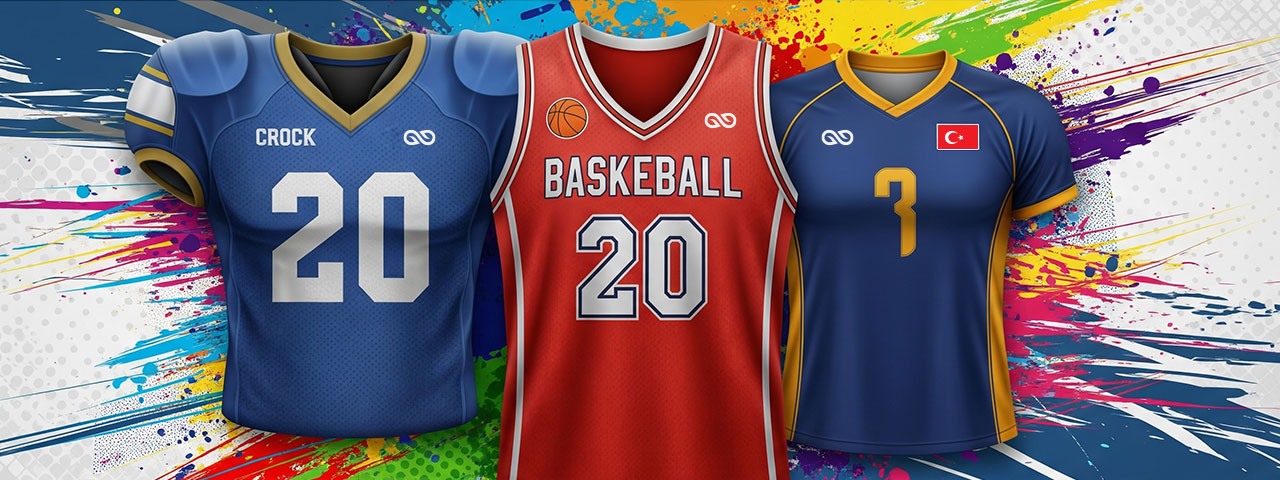
Short answer: There is no single official number of types of sports jerseys. Jerseys are usually grouped in four ways: by sport (soccer, basketball, volleyball, hockey and so on), by kit (home, away, third, goalkeeper, training), by version (authentic player jersey or replica fan jersey) and by construction (collar, sleeve, fabric and printing method). This guide explains each group.
What is a sports jersey?
A sports jersey is the top a player wears in a game, made in the team's colors and usually showing the team crest, the player's number and often the player's name. Its main job is to identify the team and each player at a glance, for referees, teammates and fans. Modern jerseys are made from light polyester fabrics that move sweat away from the body, and they are cut for the movements of each sport.
Types of jerseys by sport
Each sport shapes its jersey differently, because each sport asks different things of the body:
| Sport | Typical jersey | What makes it different |
|---|---|---|
| Soccer (football) | Short or long sleeve, round or V-neck, fitted cut | Light, breathable fabric for 90 minutes of running; number on the back, often on the shorts too |
| Basketball | Sleeveless tank top with a deep armhole | Free shoulders for shooting; numbers on front and back |
| Volleyball | Sleeveless, short or long sleeve, close fit | Libero wears a contrasting color from the rest of the team |
| American football | Short-sleeve mesh jersey cut wide at the shoulders | Fits over shoulder pads; very large numbers |
| Ice hockey | Oversized long-sleeve jersey (often called a sweater) | Worn over pads; reinforced elbows and hem |
| Baseball | Button-front short-sleeve jersey | Looser fit; often worn with an undershirt |
| Rugby | Tight-fitting, heavier jersey, often with a collar | Made to resist pulling and tackles |
| Cricket | Polo-style shirt, short or long sleeve | Collar and lighter colors for long games in the sun |
| Cycling | Skin-tight jersey with a front zip and rear pockets | Aerodynamic fit; pockets for food and tools |
| Esports | Soccer-style short-sleeve jersey | Player's gamer tag instead of a surname; sponsor-heavy designs |
Types of jerseys by kit
Within one team there are several jersey types, each with its own purpose:
- Home jersey: the team's main colors, worn in home games.
- Away jersey: a different, usually lighter or contrasting color so it does not clash with the home team.
- Third jersey (alternate): used when both home and away colors clash with the opponent, or for special events.
- Goalkeeper jersey: in soccer, the goalkeeper must wear colors that distinguish them from all other players and the referees. Goalkeeper jerseys are often long-sleeved and padded.
- Libero jersey: in volleyball, the libero wears a contrasting color from teammates.
- Training jersey: a simpler jersey for practice, sometimes reversible so a squad can split into two teams.
- Warm-up or pre-match jersey: worn before kick-off, often in a different design from the match kit.
Types of jerseys by version: authentic, replica and retro
| Version | Who wears it | Fit and fabric |
|---|---|---|
| Authentic (player) jersey | Professional players | Slim, athletic fit; lightest technical fabric; usually the most expensive |
| Replica (fan) jersey | Fans | Looser, everyday fit; same design, simpler fabric; lower price |
| Retro (throwback) jersey | Fans and collectors | Recreates a classic design from an earlier season |
| Custom team jersey | Amateur clubs, schools, companies, friends | Designed and produced for one team, with its own crest, names and numbers |
If you play in a team rather than support one, the type you need is the last one: a custom team jersey, made for match use but with your own design.
Types of jerseys by construction
Collar types
- Round neck (crew neck): the most common; clean and sporty.
- V-neck: more open around the neck; popular in soccer and volleyball.
- Polo collar: a folded collar, often with buttons; classic look, common in cricket and retro soccer kits.
- Mandarin (grandad) collar: a short standing collar without a fold.
Sleeve types
- Sleeveless: basketball, volleyball and summer sports; maximum shoulder freedom.
- Short sleeve: the standard for soccer, volleyball and esports.
- Long sleeve: goalkeepers, winter games and sports with ground contact.
- Raglan sleeve: the sleeve seam runs diagonally to the collar, giving more freedom of movement than a standard set-in sleeve.
Fabric types
| Fabric | Feel | Typical use |
|---|---|---|
| Polyester (smooth) | Light, stretchy, dries fast | Most modern match jerseys |
| Mesh | Open weave, very breathable | Basketball, American football, side panels |
| Honeycomb / piqué knit | Textured, slightly thicker, durable | Premium soccer and volleyball jerseys |
| Polyester–elastane blends | Close, stretchy fit | Cycling, rugby, base layers |
| Cotton and cotton blends | Soft but holds sweat | Fan wear and casual jerseys, not match play |
Printing and decoration methods
- Sublimation: the ink is turned into gas with heat and bonded into the polyester fibres. The design becomes part of the fabric, so it does not crack or peel and allows unlimited colors and full-surface patterns.
- Heat transfer (vinyl): names and numbers are cut from a film and pressed onto the jersey; quick, but can crack or peel over time.
- Screen printing: ink is pushed through a stencil; good for simple logos in a few colors.
- Embroidery: stitched crests and logos with a premium, raised look; heavier and less breathable.
- Tackle twill: fabric letters and numbers sewn onto the jersey; traditional in American sports.
How to choose the right jersey type for your team
- Start with the sport: the sport decides the cut (sleeveless for basketball, fitted for soccer, contrasting libero for volleyball).
- Plan your kits: a team in a league needs at least a home and an away jersey, plus a goalkeeper or libero jersey.
- Pick the sleeve and collar: short sleeves for most games, long sleeves for winter and goalkeepers.
- Choose the fabric: light smooth polyester for heat, textured honeycomb for durability.
- Choose the printing: sublimation if you want many colors, patterns, names and numbers that last.
Custom team jerseys from Roaft
Roaft designs and produces custom team jerseys in Istanbul for soccer, basketball, volleyball and esports teams. Every jersey is sublimation printed on Micro Poly, Micro Rain or Micro Honeycomb fabric; the design, names, numbers, crest and sponsors are included in the price, and orders start from 5 pieces.
- Custom soccer jerseys and soccer team kits (jersey + shorts)
- Custom basketball jerseys
- Custom volleyball jerseys, including libero jerseys
- Goalkeeper jerseys and esports jerseys
Frequently asked questions about jersey types
How many types of jerseys are there?
There is no official number. Jerseys are usually grouped by sport (soccer, basketball, volleyball, hockey, baseball and others), by kit (home, away, third, goalkeeper, training), by version (authentic, replica, retro, custom) and by construction (collar, sleeve, fabric and printing).
What are the different types of soccer jerseys?
A soccer team usually has a home jersey, an away jersey, a third jersey and a goalkeeper jersey, plus training and warm-up tops. Each can be an authentic player version or a replica fan version.
What is the difference between an authentic and a replica jersey?
An authentic jersey is the version players wear in matches: a slimmer fit and lighter technical fabric. A replica is the fan version with the same design, a looser fit, a simpler fabric and a lower price.
What are sports jerseys made of?
Most modern sports jerseys are made of polyester, often in smooth, mesh or honeycomb knits, sometimes blended with elastane for stretch. Cotton is used mainly for fan and casual jerseys because it holds sweat.
Which printing method lasts longest on a jersey?
Sublimation lasts longest on polyester jerseys, because the ink bonds into the fibres instead of sitting on top of the fabric, so it does not crack or peel in the wash.
Why do basketball jerseys have no sleeves?
Basketball jerseys are sleeveless so the shoulders and arms can move freely when shooting, passing and rebounding.
Why does the goalkeeper wear a different jersey?
In soccer, the rules require the goalkeeper to wear colors that distinguish them from all other players and the referees, so the officials can always tell who may handle the ball.
Can I get a custom jersey for my own team?
Yes. Custom team jerseys are designed with your team's colors, crest, names and numbers. At Roaft the design is free and orders start from 5 pieces for soccer, basketball, volleyball and esports teams.
1 Comment(s)
Great analysis! Didn’t even know that there were different kinds of jerseys based on the sport played, material, and fit. The plus point is that I also love strategic games, and after reading about different sports through several articles, I end my day playing some games from https://wordleunlimited.dev/ .
Leave a Comment